
Disassembly & Reassembly
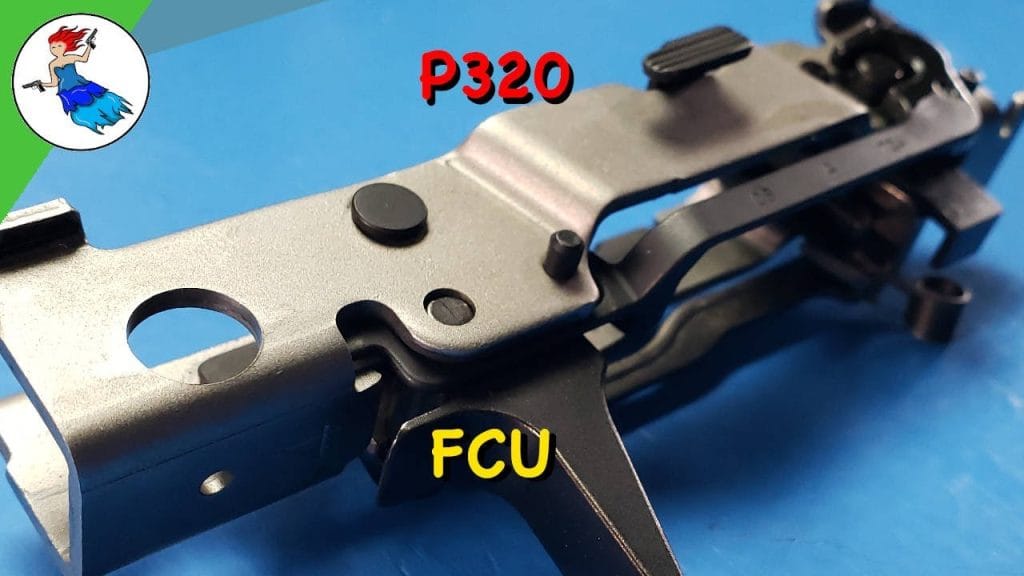
SIG P320 FCU DISASSEMBLY AND REASSEMBLY: Learn how to maintain your Sig P320 FCU
The Sig P320 Fire Control Unit (FCU) is the serialized heart of the pistol. Understanding how to disassemble and reassemble it is…
Start Here Hub
Every firearm project should end with a safety check and a function check. Learn how to verify the firearm is clear, the controls work correctly, the action cycles properly, and nothing obvious was missed before it goes back into use.
Start Here
Bench Check
Use this page as your bench-side reminder before calling a job done. Check that the firearm is clear, the action moves correctly, the controls behave as expected, the magazine fits properly, and nothing was left behind on the mat.
Safety & Function Checks
Every firearm project should end with a safety check and a function check. Not a victory lap. Not “yeah, that feels about right.” A real check verifies the firearm was reassembled correctly, the controls work as expected, and nothing obvious is wrong before it goes back into storage, a holster, or the range bag.
Bench Rule
Both matter. Skipping either one is how simple bench work turns into a bad story.
A safety and function check is a basic inspection process used after cleaning, maintenance, disassembly, reassembly, troubleshooting, or parts replacement.
The goal is simple: make sure the firearm is safe to handle and appears to function correctly before it is used again.
That does not mean you are proving the firearm is perfect. It does not replace live-fire testing. It does not replace manufacturer instructions. It does not turn a risky repair into a good idea. It means you are checking the obvious things before trusting the firearm.
A good check helps confirm the firearm is unloaded, the action moves normally, the controls work as expected, the safety mechanisms appear to operate correctly, the trigger and reset behave normally, the magazine seats and releases correctly, and nothing feels, sounds, or looks wrong.
It also confirms one more important thing: no parts are left on the bench. If there is a spring, pin, screw, or tiny mystery part sitting next to your mat after reassembly, you are not done. You are in the “find out what you missed” phase.
A safety check verifies the firearm is clear, safe to handle, and free from obvious unsafe conditions before you work on it or inspect it.
A function check verifies that the firearm’s basic mechanical operations appear to work correctly after maintenance, cleaning, disassembly, reassembly, or parts replacement.
Before any check, the firearm must be verified unloaded.
Do not assume. Do not trust memory. Do not trust the last person who handled it. Do not trust yourself from five minutes ago.
Use the same process every time:
Live ammo does not belong on the workbench during cleaning, inspection, dry function checks, or reassembly work. Not in a box next to the mat. Not in a loose magazine nearby. Not sitting there because “I know it is there.” Away from the bench.
That one habit removes a lot of stupidity before it has a chance to clock in.
There is no single function check that applies perfectly to every firearm.
A Glock, 1911, AR-15, DA/SA pistol, revolver, pump shotgun, bolt-action rifle, lever gun, and striker-fired pistol are not all checked the same way. They have different controls, safeties, lockup systems, trigger systems, magazine systems, and operating sequences.
That means the manufacturer’s manual matters. Use it.
Yes, manuals are boring. They read like a lawyer and an engineer got locked in a break room and punished the English language. Use them anyway.
The manual should be your starting point for field stripping steps, reassembly notes, safety checks, function checks, lubrication points, torque values, ammunition warnings, and part-specific cautions.
If you do not have the manual, look for the official manufacturer PDF before trusting random instructions online. Almost right can still be wrong. And with firearms, “almost right” is not where you want to live.
You should do a basic safety and function check any time the firearm has been worked on, cleaned, disassembled, adjusted, or had parts replaced.
You do not need to turn every check into a 45-minute ceremony. But you do need a repeatable process. Same steps. Same order. No guessing.
Before you start working the action or controls, look at the bench.
Ask one simple question: is anything left over?
Look for pins, springs, screws, detents, plungers, washers, clips, small internal parts, tools still attached, or parts you removed and forgot to reinstall.
If anything is left over and you do not know why, stop. Do not function check around a missing part. Do not tell yourself, “Maybe that was extra.” Firearm manufacturers are not usually hiding bonus springs in the gun like cereal box prizes.
Find out where it goes.
Before operating anything, visually inspect the firearm.
Look for:
This is where photos help. If you took pictures before disassembly, compare the firearm to those photos.
That is not overkill. That is using the rectangle in your pocket for something more useful than arguing with strangers and looking up torque specs you should have saved earlier.
With the firearm unloaded and pointed in a safe direction, check that the action moves normally.
You are looking for smooth, expected movement. Depending on the firearm type, that may mean checking the slide, bolt, charging handle, pump, lever, cylinder, or other action system.
Watch and feel for:
Some firearms have more mechanical noise than others. You are not listening for silence. You are listening for “that is not how this felt before.”
If something feels wrong, stop. Do not force it until it “wears in.” That is how people polish parts accidentally with damage.
Next, check the controls.
This depends on the firearm, but may include:
Controls should move the way they are supposed to move. They should not bind, stick, fail to engage, fail to release, or move loosely unless that is normal for the platform.
If a control worked before and now does not, something changed. Do not ignore that. The gun is giving you a clue. Try not to answer with a bigger hammer.
Magazines cause a lot of problems, and they are easy to overlook during bench work.
Check that the magazine:
Use unloaded magazines for this. If you use multiple magazines, check more than one.
A firearm may work fine with one magazine and act possessed with another. That does not always mean the firearm is broken. Sometimes the magazine is the gremlin.
Mark your magazines. It makes troubleshooting a lot easier later.
Trigger checks are firearm-specific, so use the manufacturer’s process.
The basic idea is to verify that the trigger, reset, safeties, and related controls behave as expected for that specific firearm.
You are looking for:
This is especially important if you touched anything related to the trigger system, fire control group, striker assembly, hammer, sear, safety, grip module, or internal frame parts.
If the trigger feels different after you worked on the firearm, pay attention. Different is not automatically bad. But different deserves inspection.
If the firearm has a manual safety, grip safety, firing pin safety, trigger safety, decocker, transfer bar, or other safety mechanism, the check needs to match that design.
Do not assume every safety works the same way.
A manual safety should do what the manual says it should do. A decocker should behave the way the manual describes. A grip safety should block or allow function as designed. A trigger safety should move freely and not bind.
Internal safeties may not be fully visible, which is another reason manufacturer instructions matter.
If a safety does not work correctly, the firearm is not ready. That is not a “probably fine” situation. That is a stop sign.
For semi-automatic firearms, make sure the slide or bolt closes properly and returns to battery.
Out of battery means the firearm is not fully closed or locked as designed.
That can happen because of incorrect reassembly, fouling, weak springs, damaged parts, poor lubrication, bad ammo during live-fire use, magazine issues, binding parts, or incorrectly installed components.
During a dry function check, you are not diagnosing every possible cause. You are confirming whether the action appears to close and cycle normally.
If it does not return fully to battery during dry operation, stop and inspect. Do not shrug that off.
Any screw you touched deserves attention.
That includes optic screws, mount screws, action screws, grip screws, sight screws, scope ring screws, base screws, stock screws, forend screws, and chassis screws.
If the manufacturer provides torque values, use them. Guessing torque by feel is how screws get stripped, optics come loose, parts crack, or mounts shift.
“German torque” is funny until the screw head looks like it lost a bar fight.
If thread locker is required, use the correct type and amount based on the manufacturer’s instructions. More is not always better. The goal is secure, not fossilized.
Accessories can create problems.
A new grip can interfere with a magazine release. A stock or chassis part can bind. An optic screw can be too long. A mount can shift. A holster can activate a control. A light, laser, sling mount, or rail accessory can change fit, balance, or handling.
After adding anything, check for interference.
Accessories are not automatically harmless just because they bolt on. Bolt-on problems are still problems. They just arrive in nicer packaging.
Reality Check
A dry function check is important, but it does not prove everything. Some problems only show up during live fire, including feeding problems, extraction problems, ejection problems, cycling issues, ammo sensitivity, magazine problems, loose optics, zero shift, and heat-related problems.
A written checklist sounds overkill until it saves you from missing something dumb.
You can adjust this based on firearm type. The value is not the paper. The value is the habit.
The same problems show up over and over.
People finish the job and want to be done. That is when they skip the check. Do not rush the last step.
A function check must match the firearm. Generic checks can miss firearm-specific problems.
Dry checks and live ammo do not belong in the same workspace.
If something feels wrong, stop and inspect. Weird is data.
Magazine fit and function matter. Check them.
Loose screws cause wandering optics, shifting mounts, and mystery problems.
If the firearm was repaired, modified, or had reliability issues, live-fire testing may still be needed.
If the safety does not work, the trigger feels wrong, parts bind, or anything seems off, stop. The gun is not ready.
Get qualified help if:
There is no shame in stopping. Stopping is not failure. Stopping is how you keep a small problem from becoming a bigger, louder problem.
Final Bench Rule
It is done when the firearm has been checked, the controls work as expected, the safeties behave correctly, the action cycles properly, the magazines fit, the screws are secure, and nothing feels wrong.
Safety and function checks are not exciting.
Good.
Exciting is usually bad when a firearm surprises you.
Slow down. Verify your work. Use the correct procedure. Follow the manual. Test carefully. And if something feels wrong, stop before the problem gets expensive.
That is not being timid. That is being competent.
Disassembly & Reassembly
The Sig P320 Fire Control Unit (FCU) is the serialized heart of the pistol. Understanding how to disassemble and reassemble it is…
Rifle Troubleshooting
Firearm & Accessory Reviews
Every rifle shooter has lived the same frustration. You line up your shot, breathe, squeeze the trigger, and then recoil throws you…
Bags
A no-nonsense guide to choosing a range bag that actually works. Learn what separates a dedicated pistol range bag from a glorified gym duffel.
Bags
In this video, we take an in-depth look at the Falco M102 bag, a premium range bag that goes beyond just carrying…
Firearm & Accessory Reviews
After 30 years of trying different carry guns, the Lone Wolf Dusk 19 finally stuck. Here's my honest, long-term review.