- Beretta 80 Series Frame Disassembly: 84, 85, 81 Step-by-Step Guide
- Video Walkthrough
- Video Summary
- Tools & Parts Checklist
- Recommended Tools
- Inspector Checklist: Read Before You Start
- Step 1: Remove the Grip Panels
- Step 2: Remove the Slide Release Lever
- Step 3: Remove the Takedown Lever, Trigger Spring, and Button
- Step 4: Remove the Safety Wing Pin (Right Side)
- Step 5: Remove the Trigger Bar (85 Only)
- Step 6: Remove the Trigger
- Step 7: Remove the Safety Lever
- Step 8: Remove the Mainspring
- Step 9: Remove the Sear and Sear Spring
- Step 10: Remove the Hammer
- Step 11: Remove the Ejector and Hammer Stop
- Step 12: Remove the Magazine Release
- Inspection Points
- Cleaning
- Reassembly
- Quick Troubleshooting
- Maintenance: Keep the Frame Running
- Extended FAQ
- Final Thoughts: Confidence Through Competence
Beretta 80 Series Frame Disassembly: 84, 85, 81 Step-by-Step Guide
Do you need to replace a trigger bar, inspect your sear spring, or just deep-clean the guts of your Beretta Cheetah frame? You are not alone. Parts in a firearm can wear out or break, and the frame is where most of the wear happens. This guide walks you through complete frame disassembly for the Beretta 80 series: the Beretta 81, Beretta 84, and Beretta 85 (F and FS models). The 84 is a double-stack .380 ACP. The 85 is the single-stack version. The 81 is chambered in .32 ACP. All three share the same frame geometry, so the disassembly procedure is identical with two exceptions: the magazine release and the magazine disconnect.
Note: The 84 magazine release is reversible like the 92 series. The 85 magazine release is held by a roll pin and is not reversible. Only the 85 has a magazine disconnect that blocks the trigger bar when the magazine is removed. If you have an 84, skip the magazine disconnect steps.
Before you start, unload the pistol and remove the slide using the field strip procedure shown in the companion guide. Work on a clean, well-lit bench with a white towel or cleaning mat. The Beretta 80 series has many small springs, detents, and roll pins that vanish on cluttered surfaces.
Video Walkthrough
Video Summary
This video demonstrates complete frame disassembly of the Beretta 80-series Cheetah for deep cleaning, parts inspection, and component replacement. The walkthrough covers grip panel removal with proper gunsmith screwdrivers, identifying the 84 versus 85 magazine release difference, removing the 85-only magazine disconnect, dismantling the slide release lever and takedown lever assembly, removing the safety wing and safety lever with detent capture, decocking the hammer by tripping the sear, removing the mainspring under controlled pressure, extracting the sear and sear spring, hammer removal, ejector and hammer stop disassembly, and finally removing the magazine release with its detent spring. Special attention is given to capturing spring-loaded parts before they launch.
Watch the full walkthrough above if any step in the written guide feels unclear. The video shows the exact hand positions and thumb coverage that prevent losing small parts under spring pressure.
Safety Gate: Read Before You Touch Anything
- Ensure the pistol is unloaded. Remove the magazine and visually inspect the chamber.
- Remove the slide using the field strip procedure before proceeding.
- Work on a clean, well-lit bench. Small springs and detents disappear on cluttered surfaces and carpet.
- Wear safety glasses. Springs and detents can launch unexpectedly under pressure.
- The hammer is under mainspring tension. Never remove the mainspring without first decocking the hammer by tripping the sear. Failure to decock can cause parts to launch or damage the frame.
- This guide covers frame disassembly only. Internal fire-control fitting is beyond the scope of this guide.
Tools & Parts Checklist
| Part / Tool | Used For | Notes |
|---|---|---|
| Gunsmith screwdriver (flat-blade) | Grip panel screws | Gunsmith screwdrivers fit grip screws properly. Regular hardware store screwdrivers chew heads. |
| Safety glasses | Eye protection | Non-negotiable. Small springs and detents can launch under pressure. |
| 1/16-inch roll pin starter punch (hollow-tip) | Safety wing pin, mag release pin, small frame roll pins | Starter punch is long enough to drive these pins. Never use solid center punches on roll pins. The hammer pin is NOT a roll pin; use the 1/8-inch solid punch for that. |
| 1/16-inch roll pin punch (hollow-tip) | Finish removing small roll pins | Switch after starter punch bottoms out |
| 3/32-inch roll pin starter punch (hollow-tip) | Mainspring cap pin | Just long enough to start the cap pin removal |
| 1/8-inch punch | Hammer pin removal | Standard solid punch. Hammer pin is not a roll pin. |
| Small flat-head screwdriver | Prying parts, scraping carbon | Non-marring for gentle prying |
| Brass or plastic hammer | Tapping punches | Steel hammers mushroom pin ends. Tap, do not pound. |
| Cleaning mat or white towel | Parts layout | Makes small parts visible against a light background |
Recommended Tools
Workbench Pick
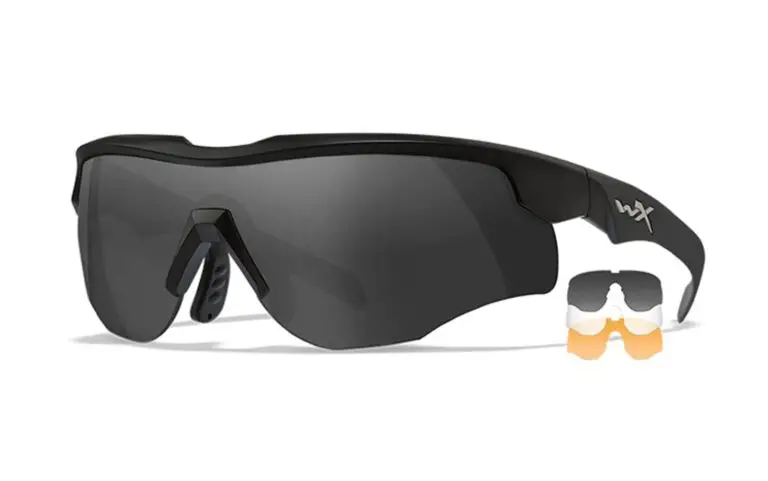
Wiley X Rogue Safety Glasses
Best for: Eye protection at the bench and range. Close-fit design prevents fogging under shop lights.
TRB take: Eye protection is not optional on the bench. I use Wiley X Rogue because they sit close, do not fog, and handle the stray brass and debris from pin work without shifting.

Workbench Pick
Aegis Gun Care: Cleaner, Lube & Grease
Varies at Aegis Gun Care
Best for: Cleaning carbon from chambers, lubing rails, and protecting bore and internals between range sessions.
TRB take: Most AR problems blamed on parts are actually dry, dirty rifles. A quality cleaner and lube fixes more malfunctions than a parts bin. If the chamber looks like a coal mine and the carrier rails are dry, do not blame the magazine.
Inspector Checklist: Read Before You Start
Step 1: Clear the Pistol
Remove the magazine. Rack the slide multiple times to ensure the chamber is empty. Visually and physically inspect the chamber. Remove the slide using the field strip procedure.
Step 2: Decock the Hammer by Tripping the Sear
Once the safety lever is removed, you will have no way to decock the hammer safely other than tripping the sear. Do this before removing the mainspring. Place your finger on the hammer to control its fall. Find the sear in the hole below the hammer. Push the sear out of the way with a screwdriver or punch to let the hammer drop to its resting position.
Step 3: Organize Small Parts Immediately
Every spring, detent, and pin that comes out goes straight onto the white towel. Do not set parts on the edge of the bench. Trigger bar springs and detent springs are small enough to bounce off a table and vanish.
Step 4: Identify Your Model
Before you start, verify whether you have an 84 or an 85. The 85 has a magazine disconnect on the right side of the frame and a non-reversible magazine release held by a roll pin. The 84 lacks the disconnect and has a reversible release. If you have an 84, skip the steps labeled 85-only.
Step 1: Remove the Grip Panels
Start at the back of the frame. Use a proper gunsmith screwdriver to remove the grip panel screws. A regular hardware store screwdriver is too wide and does not fit the screw slots properly. It will round off the screw heads.
As each screw comes out, set it aside with its lock washer. Some grip panels have lock washers recessed into the panel; others have them on the screw itself. Do not lose these washers. They prevent the screws from backing out under recoil.
Step 2: Remove the Slide Release Lever
Move to the front of the frame. The slide release lever is the same assembly you operated during field strip, but now you are removing it completely instead of just rotating it.
Push in on the disassembly button on the left side of the frame. While holding the button in, rotate the takedown lever on the right side in the opposite direction from field strip. The lever should rotate freely. Once rotated, pull the lever straight out of the frame. The button may come with it or stay in the frame.
Step 3: Remove the Takedown Lever, Trigger Spring, and Button
The takedown lever sits behind the trigger. It also retains the trigger spring and the disassembly button. This is a spring-loaded assembly. When you remove the lever, the trigger spring will try to jump out.
Place your thumb directly over the takedown lever area to cover the spring. Lift the takedown lever up and out of the frame. The takedown lever spring and the trigger spring will come out with it or immediately after. Keep your thumb in place until you have captured both springs.
Once the springs are captured, remove the disassembly button from the frame if it did not come out with the lever.
Pro Tip: The trigger spring is a small coil spring with a leg. Note which end has the leg and which hole in the frame it hooks into. Reassembling without the leg in the right hole means the trigger will feel dead or have no reset.
Step 4: Remove the Safety Wing Pin (Right Side)
On the right side of the frame, you will see the safety wing, a curved piece of metal that acts as a lever for the thumb safety. A small roll pin holds the wing to the safety shaft.
Use a 1/16-inch roll pin starter punch to drive the pin out from left to right. The pin is short and comes out quickly. As the pin walks out, place your free hand under the frame to catch it. Do not let it drop onto the bench.
With the pin removed, lift the wing straight up and off the safety shaft. Set the wing and pin aside together.
Step 5: Remove the Trigger Bar (85 Only)
84 owners: Skip this step. The 84 does not have a magazine disconnect, so the trigger bar comes out with the trigger in the next step.
85 owners: The trigger bar is still connected to the magazine disconnect on the right side of the frame. Pull up on the front of the trigger bar to disconnect it from the trigger. You will see the magazine disconnect leg interfering with removal.
Lift the leg of the magazine disconnect spring to free it. Now rotate the trigger bar out of the way. The trigger bar may bind on the frame rails; wiggle it gently until it clears. Once rotated, slide it down and out of the frame.
Underneath the trigger bar, you will find the trigger bar spring and the trigger release lever. The trigger release lever pulls straight up. The magazine disconnect spring slides straight out. The trigger bar spring pulls straight up and out.
Step 6: Remove the Trigger
With the trigger bar out of the way, the trigger is no longer connected to anything. The trigger sits on a pin in the frame and should flop freely. Rotate the trigger until it aligns with the slot in the frame, then pull it straight out.
Do not force the trigger. If it will not rotate, check that the trigger bar is fully clear. The trigger bar hooks into the back of the trigger and will bind if partially connected.
Step 7: Remove the Safety Lever
Flip the frame over so the left side faces up. The safety lever is still engaged in the frame. To remove it, you must decock the hammer first, then release the detent spring.
Hold the frame with your left hand. Push down on the safety lever wing with your right hand while cocking the hammer with your left thumb. This is the removal technique, not the operational direction. On the 80-series FS, UP is safe/decock and DOWN is fire. Pushing down on the wing for removal is correct because you are rotating against the detent spring, not switching the safety to fire mode.
While holding the wing down, push the safety lever out from the left side with your thumb. Keep your palm firmly covering the detent hole on the right side of the frame to capture the detent ball and spring as they come out.
The safety lever should slide out sideways. As it clears, the detent and detent spring will push out from the frame under pressure. Capture them before they launch.
Warning: The detent spring is tiny and under pressure. It will try to shoot across the room. Keep your palm over the detent hole at all times during removal.
Once the safety lever is out, rotate the wing off the shaft from the right side. You now have the wing, the safety lever, the detent, and the detent spring as four separate parts.
Pro Tip: Before you remove the mainspring, you must decock the hammer by tripping the sear. There is no trigger or safety to lower the hammer once the frame is stripped this far. Place your finger on the hammer to control its fall. Find the sear in the hole below the hammer and push it out of the way with a small screwdriver or punch. The hammer will drop to its resting position.
Step 8: Remove the Mainspring
The mainspring sits in a housing at the rear of the frame. A roll pin through the mainspring cap holds it in place. This is a spring-loaded assembly with significant tension.
Use a 3/32-inch roll pin starter punch to drive the mainspring cap pin out from left to right. Drive it only far enough to release tension; do not remove the punch yet.
Place your thumb firmly over the mainspring cap before removing the punch. The cap is under mainspring pressure and will push out when the pin clears. Slowly remove the punch while pressing down on the cap with your thumb. Let the spring pressure bleed off gradually.
With the pressure relieved, remove the mainspring cap, the guide rod, and the mainspring from the frame. The hammer should now move freely with no spring pressure.
Warning: Never remove the mainspring cap pin without controlling the cap with your thumb. Drive the pin only until tension releases, then stop. Do not fully remove the pin before your thumb is firmly over the cap. The mainspring is strong enough to launch the cap across the room and lose the guide rod in the process. If the cap launches, the guide rod and spring will follow.
Step 9: Remove the Sear and Sear Spring
The sear sits in a hole in the top of the frame below the hammer. It is held by a sear pin and powered by a sear spring that sits in a hole near the bottom of the frame.
First, remove the bottom pin in the sear spring hole. On the 85, this is where the magazine disconnect slides on; on the 84, it is just a roll pin. Push the pin out from left to right using a 1/16-inch punch. Your punch will be holding the sear spring tension.
With the bottom pin out, the sear spring is still held in place by the sear pin above it. Now remove the sear pin with a 3/32-inch punch. As you pull the sear pin, the sear will flop freely and the sear spring will push out from its hole.
Separate the sear, the sear pin, and the sear spring. Note how the sear spring legs engage the sear: one leg pushes up on the sear tail, the other leg rests against the frame wall.
Warning: Sear spring orientation is critical for safe operation. If the legs are reversed, the sear will not engage the hammer properly. This can cause hammer follow (the hammer drops to half-cock or fully down when the slide cycles) or a dead trigger. Never install the sear spring backwards. If you are unsure, take a photo before removal.
Step 10: Remove the Hammer
The hammer is held by a single pin driven through the frame from right to left. Use a 1/8-inch solid punch to push the hammer pin out. The pin should walk out easily with light taps from a brass hammer.
With the pin removed, lift the hammer straight up and out of the frame. The hammer strut is attached to the hammer and comes out with it. Do not lose the strut.
Step 11: Remove the Ejector and Hammer Stop
At the rear of the frame, near the hammer area, there are two small springs and the hammer catch. These are held by two pins. The rear pin is a 1/16-inch roll pin that also holds the back of the ejector. The front pin is a standard solid pin.
This area has multiple small springs under tension. Before removing any pin, place your hand over the entire area to capture parts.
Remove the rear roll pin with a 1/16-inch roll pin punch. This pin holds the back of the ejector but has no springs directly on it. Next, remove the front solid pin with a standard punch. As the front pin clears, the hammer stop and its spring will push out. The second small spring will also be released.
Carefully lift out the hammer stop, both small springs, and the ejector. The ejector pulls straight up from the frame once both pins are removed.
Pro Tip: The two small springs are different lengths and tensions. Lay them out left-to-right as they came out of the frame. Swapping them during reassembly causes timing problems with the hammer and ejector.
Step 12: Remove the Magazine Release
The magazine release sits on the left side of the frame. On the 84, the release is reversible and slides out after removing a retaining pin. On the 85, a roll pin holds the release in place and it is not reversible.
Drive the retaining pin out from left to right using a 1/16-inch roll pin starter punch. The pin exits into the magazine well. Keep your thumb over the magazine release as you remove the pin to prevent the release from popping out.
Once the pin is clear, the release should feel loose. Push the release inward slightly to access the detent and spring behind it. Remove the detent ball and the detent spring. The detent spring is small and under tension.
Now push the magazine release forward as far as it will go, then rotate it and pull it straight out of the frame. If the release binds, check that the retaining pin is fully clear.
Finally, remove the remaining pin from the frame using a 1/16-inch roll pin punch. The frame is now fully stripped except for the grip screw bushings, which require a special tool that most shooters do not own.
Inspection Points
With the frame fully disassembled, visually inspect the following before cleaning or reassembly:
Frame Rails: Check for burrs, cracks, or galling. The trigger bar rides along the left rail. Any roughness there will cause trigger grit.
Trigger Bar and Trigger Bar Spring: Check for kinks or set. A weak trigger bar spring causes inconsistent trigger reset or a dead trigger on the first pull.
Sear and Sear Spring: The sear engagement surface should be crisp, not rounded. A rounded sear causes hammer follow. The sear spring should be straight with uniform coils.
Hammer Strut: Should be straight with no burrs. A bent strut binds in the mainspring housing and causes light primer strikes.
Mainspring and Guide Rod: Check the spring for compression set or broken coils. Inspect the guide rod for bends. A bent rod causes inconsistent hammer fall.
Safety Detent and Spring: The detent ball should be round and smooth. A flattened detent causes a mushy safety feel or incomplete engagement.
Magazine Release Detent: Should be round and move freely in its hole. A sticky detent causes the release to hang up or not pop out reliably.
Cleaning
Step 1: Clean the Frame
Wipe the frame rails, trigger well, hammer well, and sear pocket with a cleaner-soaked cloth. Pay attention to the sear pocket: carbon buildup here causes inconsistent sear engagement and hammer follow. Use a cotton swab for the sear spring hole and mainspring housing.
Step 2: Clean the Trigger Bar and Trigger Assembly
Wipe the trigger bar with a clean cloth. Inspect the magazine disconnect leg on the 85 for wear. Clean the trigger bar spring hole with a pipe cleaner. Do not stretch or compress the spring during cleaning.
Step 3: Clean the Sear and Hammer
Wipe the sear engagement surface and the hammer hooks with a clean cloth. Do not alter the angles. If the sear or hammer hooks are rounded, replace the part rather than trying to stone them without proper fixtures.
Warning: Do NOT apply oil or lubricant to the sear engagement surfaces or hammer hooks. Oil attracts carbon and powder residue, which causes buildup that prevents proper sear engagement. A contaminated sear surface can cause dangerous hammer follow or failure to hold at full cock. Keep these surfaces completely dry.
Step 4: Clean Small Parts
Wipe the ejector, hammer stop, and both small springs. Blow out the detent holes with compressed air if available. Do not bend the ejector during cleaning.
Reassembly
Reassembly is the reverse of disassembly. Work on a clean surface and keep parts organized left-to-right as they came out. The Beretta 80 series frame has many small springs and detents that are easy to install backwards or in the wrong holes.
Step 1: Install the Magazine Release
Insert the magazine release into its slot from the left side. Push it forward, rotate it into position, and align the pin holes. Insert the detent and detent spring from the inside of the frame. Drive the retaining pin in from left to right.
Step 2: Install the Ejector and Hammer Stop
Place the ejector in its slot. Install the two small springs and the hammer stop. The hammer stop goes in first, then the springs. Drive the front solid pin, then the rear roll pin. Both pins must be flush with the frame surface.
Step 3: Install the Hammer
Drop the hammer into the frame with the strut pointing downward. Align the pin hole and drive the hammer pin in from left to right. The hammer should pivot freely.
Step 4: Install the Sear and Sear Spring
Place the sear spring in its hole with one leg pushing up on the sear tail. Insert the sear into its pocket. Drive the sear pin to lock the sear in place. Now drive the bottom pin to lock the sear spring.
Step 5: Install the Mainspring
Insert the mainspring and guide rod into the housing. Place the cap over the rod. Compress the spring with your thumb while sliding the cap pin in from left to right. The pin should slide in easily if the cap is fully compressed.
Step 6: Cock and Decock the Hammer
Cock the hammer and verify the sear engages. Trip the sear with a punch to verify the hammer drops smoothly. If the hammer hangs up, check mainspring alignment and sear engagement.
Step 7: Install the Safety Lever and Wing
Insert the safety lever from the left side. Place the detent and spring in the frame hole from the right side. Slide the wing onto the shaft and align the roll pin hole. Drive the 1/16-inch roll pin to lock the wing.
Step 8: Install the Trigger
Insert the trigger into its slot and rotate it into position. On the 85, install the trigger bar spring, trigger release lever, and magazine disconnect spring before connecting the trigger bar. On the 84, install the trigger bar directly.
Step 9: Install the Takedown Lever and Springs
Insert the disassembly button. Place the trigger spring in its hole with the leg engaging the trigger. Install the takedown lever spring. Push the takedown lever down into position. All three parts should seat fully.
Step 10: Install the Slide Release Lever
Insert the slide release lever and rotate it to engage the disassembly button. Verify the button returns under spring pressure.
Step 11: Function Check
With the slide still off, perform a function check:
- Cock the hammer and press the safety on. The hammer should not fall.
- Disengage the safety. The hammer should remain cocked.
- Pull the trigger. The hammer should fall.
- On the 85, verify the magazine disconnect blocks the trigger when the magazine is removed and allows it when inserted.
- Verify the hammer catch engages at the half-cock position. Pull the hammer back to half-cock and verify it holds. If the hammer falls past half-cock, the hammer catch or its spring is not installed correctly.
Quick Troubleshooting
| Problem | Likely Cause | Fix |
|---|---|---|
| Mainspring cap launches during removal | Cap pin removed without thumb pressure on cap | Always keep thumb over cap when removing pin. Use a helper hand if needed. |
| Safety detent or spring lost | Palm not covering detent hole during safety lever removal | Cover the right side detent hole with your palm before pushing the lever out. Search the floor with a magnet. |
| Trigger feels dead or has no reset | Trigger bar spring leg in wrong hole or spring missing | Remove trigger bar. Verify spring leg engages the correct frame hole and the trigger bar hook engages the trigger. |
| Hammer does not cock or follow down | Sear spring leg not engaging sear tail | Remove sear spring. Verify one leg pushes up on the sear tail and the other rests against the frame wall. |
| Magazine release pops out or feels loose | Retaining pin not fully seated or detent spring missing | Remove release, verify detent and spring installed, drive pin fully flush with frame. |
| 85 trigger dead with magazine removed | Normal operation, or magazine disconnect spring missing | If trigger works with magazine inserted, this is normal 85 behavior. If trigger is dead with magazine inserted, reinstall disconnect spring. |
Maintenance: Keep the Frame Running
The Beretta 80 series frame is a simple fire-control system, but it depends on clean sear engagement and healthy springs for reliable operation. Deep clean the frame rails and sear pocket after every 1,000 rounds. Apply a light coat of cleaner and protectant to the sear engagement surfaces, hammer hooks, and frame rails. Wipe off excess. Over-oiling attracts carbon and powder residue that causes grit and inconsistent trigger pull.
Every 2,500 rounds, inspect the mainspring for compression set. A mainspring that has shortened by more than one coil length should be replaced. A weak mainspring causes light primer strikes and inconsistent ignition. The sear spring should remain straight with uniform coil spacing. Replace it if kinked or permanently bent.
Store the stripped frame components in a climate-controlled environment. Humidity causes surface rust on the hammer, sear, and frame rails, which leads to binding and light strikes.
Extended FAQ
Q: What tools do I need to disassemble a Beretta 80 Series frame?
A: You need a 1/16 inch roll pin punch, a 3/32 inch roll pin punch, a 5/32 inch standard punch, a brass or polymer hammer, a bench block, a small flat-head screwdriver, and safety glasses. A dental pick or hook tool is helpful for catching springs. White lithium grease helps hold springs in place during reassembly.
Q: Is the Beretta 84 disassembly the same as the 85?
A: The frame disassembly is nearly identical. The primary difference is the magazine disconnect safety on the 85, which uses a slightly different pin and spring arrangement. The sear spring pin on the 84 is replaced by the magazine disconnect pin on the 85. All other steps are the same.
Q: Do I need to remove the grips to disassemble the frame?
A: No. The grips and disassembly latch are removed in the first step of field stripping, before you begin frame disassembly. If you are starting from a fully assembled pistol, remove the grips and disassembly latch first, then proceed with the frame teardown.
Q: Can I disassemble the frame without a bench block?
A: You can, but it is not recommended. A bench block supports the frame while you drive roll pins and prevents damage to the frame rails. Without one, you risk marring the frame or losing pins into your work surface.
Q: What is the hardest part of Beretta 80 Series frame disassembly?
A: The trigger spring is the most difficult component to remove and reinstall. It is under significant tension and has three contact points: the trigger groove, the frame notch, and the disassembly button hole. A hook tool or modified screwdriver makes the job manageable.
Q: Should I lubricate the sear before reassembly?
A: No. The sear engagement surfaces must remain dry. Lubricant on these surfaces can cause inconsistent trigger pull or failure to fire. Apply CLP only to the slide rails, exterior surfaces, and non-friction areas of the frame.
Q: How do I keep springs from flying out during disassembly?
A: Work over a bench block or padded mat. Use your non-dominant hand to cup around the spring area as you release tension. For the mainspring, cock the hammer before removing the cap pin so the sear holds tension. For the trigger spring, release it slowly with a hook tool rather than pulling it free abruptly.
Final Thoughts: Confidence Through Competence
Frame disassembly on the Beretta 84 or 85 is not complicated once you know the sequence, but it demands attention to the small details: the mainspring cap must be controlled, the safety detent must be captured, and the trigger bar spring leg must go in the right hole. The 85 adds the magazine disconnect, which is one more small spring to track but does not change the fundamental procedure.
If this is your first time inside the frame, take photos at each step. The best insurance against a lost spring or a backwards sear is a picture of how it looked before you touched it. Get in the habit of inspecting the sear engagement and mainspring after every deep clean. The time you spend now prevents the trigger problems and light strikes that show up when you need the gun to run.