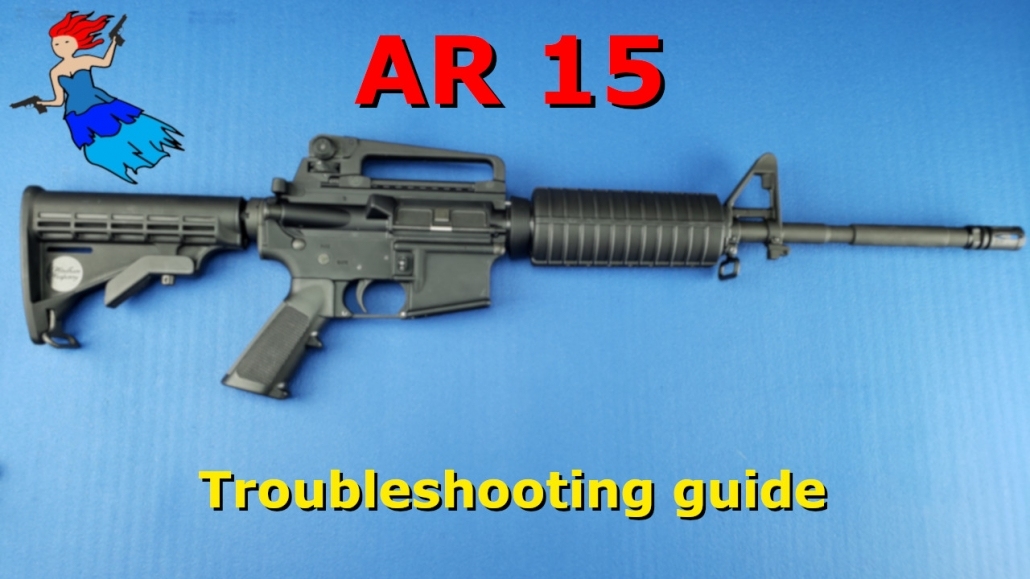
Your AR-15 just failed at the range. Or maybe it is acting weird on the workbench and you need ar-15 troubleshooting help fast. Not theory, not history lessons, not three different explanations of the same problem. This guide cuts straight to what actually works.
Follow the checkboxes. Fix your gun. Get back to shooting.
Quick Diagnosis: Find Your Problem in 30 Seconds
| What You See/Hear | Likely Section | Time to Fix |
|---|---|---|
| Round stuck on feed ramp, nose diving, or bolt rides over | Failure to Feed | 2-10 minutes |
| Click when trigger pulled, no bang, primer dented | Failure to Fire | 5-20 minutes |
| Spent brass sticking out, weak ejection, or brass to face | Failure to Eject | 5-15 minutes |
| Two rounds visible, one stuck in chamber (double feed) | Failure to Extract | 5-20 minutes |
| Bolt sluggish, won’t lock open, short-stroking | Failure to Cycle | 2-15 minutes |
| Trigger dead, won’t move forward after shot | Trigger Won’t Reset | 10-40 minutes |
Before You Start: Field strip your AR-15 and have basic tools: cleaning kit, chamber brush (brass/nylon), flashlight. Most fixes need no parts. When parts are needed, OEM is specified. Aftermarket triggers, buffers, and gas blocks are the #1 cause of malfunctions.
Tools Required by Section
| Malfunction Type | Field Kit | Workbench Tools | Parts Needed |
|---|---|---|---|
| Feeding | Cleaning kit, mags | Calipers, brass brush | Mag springs (rarely) |
| Firing | None | Headspace gauges | Hammer spring |
| Ejection | None | Extractor tool | Extractor spring, O-ring |
| Extraction | None | Cleaning rod, brush | Extractor assembly |
| Cycling | None | Vise block, calipers | Buffer, gas rings |
| Trigger | None | Punch set | Spring, disconnector |
Recommended Tools for AR-15 Troubleshooting
Here are the tools and parts referenced in this guide:

Workbench Pick
AR-15 Complete Cleaning Kit
Comprehensive AR-15 cleaning to prevent fouling-related malfunctions
Check PriceWorkbench Pick
AR-15 Chamber Brush – Brass/Nylon
Remove chamber carbon to fix extraction and feeding problems
Check PriceWorkbench Pick
AR-15 Headspace Gauges – GO/NO-GO Set
Measure chamber headspace for safe ignition and function
Check PriceWorkbench Setup Tools — For detailed maintenance and repairs:
Workbench Pick
AR-15 Upper Receiver Vise Block
Secure upper receiver for safe maintenance and assembly work
Check PriceReplacement Parts — Keep these on hand for common fixes:
Workbench Pick
AR-15 Extractor Spring and O-Ring
Fix weak extraction with upgraded spring and O-ring
Check PriceWorkbench Pick
AR-15 H/H2 Buffer
Buffer weight upgrade to tune cycling and reduce over-gassing
Check Price⚠ IS YOUR AR-15 SAFE?
STOP. CLEAR. VERIFY. Before you do anything else.
- Magazine removed
- Chamber empty (visual + finger check)
- Bolt locked back
If ANY check fails… Stop. Clear the firearm completely. No exceptions. No shortcuts.
⚠ CRITICAL: Chamber Compatibility Can Kill You
5.56 NATO vs .223 Remington vs .223 Wylde. These are NOT interchangeable. 5.56 NATO generates higher pressure than .223 chambers can handle.
Firing 5.56 NATO in a .223 Remington chamber creates dangerous overpressure.
The Rule:
- .223 Remington: Shoot .223 only
- 5.56 NATO: Shoot 5.56 OR .223
- .223 Wylde: Shoot both safely
Check barrel marking BEFORE loading ANY ammunition.
WHAT IS YOUR AR-15 DOING?
Click your symptom. Jump straight to the fix.
“My AR-15 won’t…”
- Feed rounds – Round stuck, nose-diving, bolt rides over
- Fire (click, no bang) – Hammer falls, light strikes
- Eject brass – Stovepipe, brass to face, weak ejection
- Extract rounds – Double feed, stuck casing
- Cycle fully – Short-stroking, won’t lock open
- Reset trigger – Trigger stays dead
- Work with certain magazines – One mag causes failures
Failure to Feed: Round Won’t Chamber
Symptom: Round jams on feed ramp, nose-dives into magazine, or bolt rides over top round.
Step 1: Field Check (30 seconds)
- Lock bolt to rear. Remove magazine. Inspect feed ramp for carbon buildup.
- Try different magazine. Does it feed now?
- Check magazine seats fully – does catch click?
Fixed? Yes – If not, continue to Step 2.
Step 2: Range Diagnosis (2 minutes)
- Cycle slowly by hand. Mark sticking point with Sharpie.
- Check ejection pattern of previously fired rounds.
- Try different ammunition.
Likely culprit: Magazine (80%), feed ramp carbon, buffer spring, gas system.
📌 Pro Tip: If failures happen with one magazine only, mark it with tape. Test last after confirming rifle works with known-good mags.
Fixed? Yes – If not, continue to Step 3.
Step 3: Workbench Fix
Magazine fix:
- Measure feed lip width: should be 0.353″ on USGI. Replace if spread.
- Replace magazine spring and follower with OEM.
Feed ramp fix:
- Use brass or nylon brush. Never polish chamber – alters headspace.
- Apply CLP, brush carbon. Wipe clean.
Buffer fix:
- Verify carbine vs rifle. Cannot mix carbine buffer with rifle tube.
- H buffer = 3.0oz standard. H2 = 4.6oz for heavy loads.
📌 Pro Tip: Rub a Sharpie on the feed ramp. Cycle the action. Where marker rubs off shows contact point.
Still broken? Escalation path: Find a certified AR armorer.
Reference Table: All Feeding Issues
| Symptom | Likely Cause | Quick Fix |
|---|---|---|
| Round jammed on feed ramp | Carbon on ramp, bad mag | Clean ramp, swap mags |
| Nose dive | Weak spring, spread lips | Replace spring, check 0.353″ |
| Bolt rides over | Slow mag, heavy buffer | Fresh mags, H1 vs H2 |
| Last round only | Weak spring, follower | Replace follower, check BHO |
| Intermittent | Dirty gas, mixed ammo | Clean gas tube, consistent ammo |
Buffer Weights: H=3.0oz, H2=4.6oz, H3=5.3oz. Wrong buffer is a leading cause of feeding issues.
Failure to Fire: Click, No Bang
Symptom: Trigger clicks, hammer falls, but round doesn’t fire.
Step 1: Field Check (30 seconds)
- Keep muzzle downrange 30 seconds (hangfire check).
- Eject unfired round. Inspect primer.
- Try fresh round from different magazine.
Primer strike: Deep dent = bad ammo. Shallow = weak spring. None = FCG issue.
Fixed? Yes – If not, continue to Step 2.
Step 2: Range Diagnosis (2 minutes)
- Try different ammunition. Steel primers harder than brass.
- Check hammer spring orientation.
- Look at spent brass for cratering.
Likely culprit: Ammo, hammer spring, headspace, firing pin.
📌 Pro Tip: Wolf and Tula steel-case often has hard primers. If only steel fails, switch to brass. Not a gun defect.
Fixed? Yes – If not, continue to Step 3.
Step 3: Workbench Fix
Verify chamber: 5.56 NATO, .223 Rem, or .223 Wylde.
Hammer spring:
- Field strip lower. Remove grip. Drive out trigger pins.
- Spring orientation: leg on top of trigger bar.
- Use standard AR-15 hammer spring (6 coils).
Headspace (GO/NO-GO gauges):
- GO gauge: bolt should close.
- NO-GO gauge: bolt should NOT close.
- If NO-GO closes: STOP. Replace barrel.
📌 Pro Tip: Headspace gauges cost $60-80. Replacing a ruptured case face costs more. Measure twice.
Still broken? Escalation path: Find a certified AR armorer.
Reference Table: All Firing Issues
| Symptom | Likely Cause | Quick Fix |
|---|---|---|
| Click, no primer mark | Hammer not hitting | Check FCG, hammer engagement |
| Light strike (shallow) | Weak spring, headspace | Replace spring, check headspace |
| Deep dent, no fire | Bad ammo | Try different ammo |
| Only with steel | Hard primers | Switch to brass |
| Intermittent | Worn firing pin | Clean channel, check protrusion |
Headspace Warning: If NO-GO gauge closes, do NOT fire. Excessive headspace can cause case rupture.
Failure to Eject: Stovepipe, Brass to Face
Symptom: Spent brass stuck in ejection port, stovepipe, weak ejection.
Step 1: Field Check (30 seconds)
- Ejection pattern: 3 o’clock = normal, 1 o’clock = overgassed, 4-5 o’clock = undergassed.
- Is brass dented?
- Try different ammo.
Fixed? Yes – If not, Step 2.
Step 2: Range Diagnosis (2 minutes)
- Check extractor tension: should hold bolt weight.
- Extractor spring should be tight (add O-ring if loose).
- Ejector should snap back freely.
📌 Pro Tip: Brass to face is overgassed + weak extractor. Fix extractor first, then buffer.
Fixed? Yes – If not, Step 3.
Step 3: Workbench Fix (Tools required)
Extractor spring: Replace with OEM. Add O-ring.
Chamber: Clean with brass brush. Not steel.
Gas system: Overgassed = heavier buffer. Undergassed = lighter.
Still broken? Find a certified AR armorer.
Reference Table: All Ejection Issues
| Symptom | Likely Cause | Quick Fix |
|---|---|---|
| Stovepipe | Weak extractor, overgassed, slow bolt | New extractor spring, adjust buffer |
| Brass to face | Overgassed + weak extractor | O-ring extractor, heavier buffer |
| 3 o’clock ejection | Normal, no action needed | Baseline for comparison |
| 1-2 o’clock ejection | Overgassed | Heavier buffer or adjust gas |
| 4-5 o’clock ejection | Undergassed | Lighter buffer or check gas system |
Failure to Extract: Double Feed
Symptom: Spent casing stays in chamber while new round tries to feed.
Step 1: Field Check (30 seconds)
- Pull charging handle. Does stuck case extract with force?
- Look at rim. Gouged = extractor slipped.
- Try different ammo.
Fixed? Yes – If not, Step 2.
Step 2: Range Diagnosis (2 minutes)
- Check extractor claw for chip or crack.
- Check extractor spring tension.
- Inspect chamber for carbon ring at shoulder.
📌 Pro Tip: Carbon ring at shoulder feels like increased headspace. Clean chamber first before replacing parts.
Fixed? Yes – If not, Step 3.
Step 3: Workbench Fix (Tools required)
Extractor: If chipped/cracked, replace assembly.
Chamber: Clean carbon ring. Do NOT use steel brush.
Headspace: GO closes, NO-GO doesn’t.
Still broken? Find a certified AR armorer.
Reference Table: All Extraction Issues
| Symptom | Likely Cause | Quick Fix |
|---|---|---|
| Double feed | Extraction failed, case stuck | Replace extractor, clean chamber |
| Case stuck hard | Carbon ring, gummy chamber, rim tear | Clean chamber, check extractor claw |
| Rim gouged | Extractor slipping off rim | Replace extractor spring, check claw |
| Stuck only with steel | Steel doesn’t seal well, more fouling | Clean immediately, may need tuning |
| Extraction easy but fails | Weak spring, extractor worn | Replace spring/assembly |
Failure to Cycle: Short-Stroking
Symptom: Bolt stops short, won’t go into battery, won’t lock back.
Step 1: Field Check (30 seconds)
- Manually cycle. Does bolt move freely?
- Different magazine – does it lock open?
- Different ammo.
Fixed? Yes – If not, Step 2.
Step 2: Range Diagnosis (2 minutes)
- Check gas rings: Should support bolt weight on flat surface.
- Check buffer weight. Standard carbine H = 3.0oz.
- Gas block alignment: Is port centered?
📌 Pro Tip: Heavy buffer with standard ammo causes short-stroke. Carbine system needs carbine buffer.
Fixed? Yes – If not, Step 3.
Step 3: Workbench Fix (Tools required)
Gas rings: Replace if they don’t support bolt weight.
Buffer: Carbine tube = carbine buffer. Rifle tube = rifle buffer.
Gas block: Must align with gas port.
Still broken? Find a certified AR armorer.
Reference Table: All Cycling Issues
| Symptom | Likely Cause | Quick Fix |
|---|---|---|
| Short-stroking | Heavy buffer, weak gas, light ammo | Verify buffer weight, check gas rings |
| Won’t lock back | Mag BHO worn, gas leak, weak buffer spring | Check 5,000 round spring length |
| Won’t go into battery | Dirty bolt carrier, weak spring | Clean carrier, check spring length |
| Bolt sluggish | Carbon buildup, dry lubrication | Clean rails, relube |
| Only with steel case | Steel undergassed, needs more gas | Switch to brass or check gas system |
Trigger Won’t Reset
Symptom: Trigger stays dead after firing, no click on next pull.
Step 1: Field Check (30 seconds)
- Did bolt cycle fully? Short-cycling prevents reset.
- Release trigger fully forward. Does it re-engage?
- Pull charging handle 1/4 inch. Does trigger reset now?
Fixed? Yes – If not, Step 2.
Step 2: Range Diagnosis (2 minutes)
- Field strip lower. Look at trigger housing.
- Trigger return spring attached? Twisted? Broken?
- Connector angle: bent or making contact?
📌 Pro Tip: Aftermarket triggers are the #1 cause of reset issues. If you had a trigger job and now have problems, go back to OEM.
Fixed? Yes – If not, Step 3.
Step 3: Workbench Fix (Tools required)
- Remove trigger housing.
- Replace return spring OEM. Leg on top of bar.
- Check connector. If aftermarket, use OEM.
- Inspect trigger bar for burrs.
Still broken? Find a certified AR armorer.
Reference Table: All Trigger Issues
| Symptom | Likely Cause | Quick Fix |
|---|---|---|
| Dead trigger after shot | Short-cycling, return spring broken | Fix short-cycle, replace spring |
| No reset until racked | Return spring detached, connector bent | Check spring, inspect connector |
| Gritty trigger pull | Debris in FCG, burrs on trigger bar | Clean FCG, inspect for burrs |
| Aftermarket trigger fails | Aftermarket part tolerance issue | Return to OEM trigger group |
| Trigger won’t move freely | Hammer spring tension wrong, debris | Check spring orientation |
📌 Pro Tip: Keep OEM springs and pins in a labeled bag when trying aftermarket parts. Easy rollback when issues arise.
Magazine Issues
Symptom: One specific magazine causes failures. Won’t seat. Falls out.
Step 1: Field Check (30 seconds)
- Test with different magazine. Does problem follow the mag?
- Check for over-insertion or damage to mag catch.
- Is mag body swollen? Heat + loaded mags = swelling.
Fixed? Yes – If not, Step 2.
Step 2: Range Diagnosis (2 minutes)
- Disassemble mag. Check follower for damage.
- Spring should be straight, not kinked.
- Feed lip width: 0.353″ USGI spec.
📌 Pro Tip: 80% of feeding issues are magazines. If rifle works with good mags but not one specific mag, replace that mag. Don’t waste time trying to fix what $12 replaces.
Fixed? Yes – If not, Step 3.
Step 3: Workbench Fix (Tools required)
Magazine: Replace spring and follower. OEM preferred.
Body damage: Dents prevent feeding. Dented = replace.
Catch notch: Worn notch won’t hold mag. Replace mag.
Still broken? Find a certified AR armorer.
Reference Table: All Magazine Issues
| Symptom | Likely Cause | Quick Fix |
|---|---|---|
| Mag won’t seat | Body swollen, notch damage, wrong type | Check body dimensions, try different magazine |
| Mag falls out | Worn catch, notch grooved, over-insertion | Replace mag, check catch tension |
| Won’t drop free | Body swollen, debris in mag well | Clean mag well, check mag dimensions |
| Only one mag causes failures | That magazine is defective | Replace the magazine |
| Intermittent mag issues | Spring wearing, lips spreading | Replace spring, measure lips 0.353″ |
⚠ Time to Call a Pro
Stop. If you worked through all three steps and your AR-15 is still failing, put the tools down. This is not a failure. This is knowing your limits.
Find a certified AR armorer:
- Certified AR Armorers (check manufacturer websites)
- Local gunsmiths with AR-specific experience
- Manufacturer service centers for warranty work
📌 Pro Tip: Know your limits. Some issues need GO/NO-GO gauges, receiver blocks, and specialized tools. An hour of armorer time is cheaper than a ruined rifle or unsafe firearm.
Extended FAQ: Common Questions Answered
Q: What is the difference between a Failure to Extract and a Failure to Eject?
Failure to Extract: The spent casing is still IN the chamber. The extractor never grabbed it, or grabbed it and lost grip. You see a double feed or racking does not eject.
Failure to Eject: The casing left the chamber but did not clear the gun. Stovepipe, brass to face, or dribbling out.
Why it matters: Different fixes. Extraction = extractor/chamber problem. Ejection = ejector/buffer problem.
Q: My AR-15 runs fine at the range but fails in matches. Why?
Match pressure is real. Three likely culprits:
- Different grip under pressure: Your grip tightens when adrenalized. Practice your shooting stance deliberately.
- Different ammo: Practice with one load, matches with another. Consistency matters.
- Dirty gun: Match day sees more rounds between cleanings. Carbon causes failures.
Q: Can I mix carbine and rifle buffers?
No. Carbine buffer in rifle tube or rifle buffer in carbine tube causes cycling issues.
| Component | Carbine System | Rifle System |
|---|---|---|
| Buffer | 3.0oz standard | 5.0oz |
| Spring length | ~10.5″ uncompressed | ~13″ uncompressed |
| Tube length | 7.75″ (collapsible) | 9.75″ (A2/fixed) |
Rule: Match buffer to tube length. Do not mix.
Q: How often should I replace buffer springs?
| Usage | Interval | Signs It Is Time |
|---|---|---|
| Occasional practice | Every 5,000 rounds / 3-5 years | Short-stroking |
| Competition | Every 3,000-5,000 rounds | Inconsistent cycling |
| Suppressed | Every 2,000-3,000 rounds | Faster fatigue |
📌 Pro Tip: Measure springs. Carbine should be ~10.5″ uncompressed. Rifle ~13″. Replace when shortened 1″ or more.
Q: My friend says heavy buffers fix everything. True?
- Overgassed rifle: H2 helps reduce wear
- Undergassed rifle: Heavy buffer makes short-stroking WORSE
- Standard rifle: H buffer (3.0oz) is standard for a reason
My recommendation: Fix the root cause. Heavy buffer is a band-aid, not a cure.
Q: Steel case ammo: yes or no?
- Extractor wear: Steel is harder than brass. Factor replacement cost.
- Harder primers: Light strikes more common.
- Chamber fouling: Clean every session.
Verdict: Practice with brass. Use steel for training cost savings, but clean immediately after.
Extended FAQ: Common Questions Answered
Q: What is the difference between a Failure to Extract and a Failure to Eject?
Failure to Extract: The spent casing is still IN the chamber. The extractor never grabbed it, or grabbed it and slipped. You see a double feed or racking does not eject.
Failure to Eject: The casing left the chamber but did not clear the gun. Stovepipe, brass to face, or dribbling out the port.
Why it matters: Different fixes. Extraction = extractor/chamber problem. Ejection = ejector/buffer problem.
Q: My AR-15 runs fine at the range but fails in matches. Why?
Match pressure is real. Three likely culprits:
- Limp wrist under pressure: Your grip tightens differently when adrenalized. Practice your shooting stance deliberately.
- Different ammo: You practice with one load, shoot matches with another (especially steel cased). Consistency matters.
- Dirty gun: Match day guns see more rounds between cleanings. Carbon buildup causes intermittent failures.
Q: Can I mix carbine and rifle buffers?
No. Carbine buffer in a rifle tube or rifle buffer in a carbine tube causes cycling issues.
| Component | Carbine System (6-position) | Rifle System (A2/Fixed) |
|---|---|---|
| Buffer | Carbine length, 3.0oz standard | Rifle length, 5.0oz |
| Buffer spring | ~10.5″ uncompressed | ~13″ uncompressed |
| Tube length | 7.75″ | 9.75″ |
| Buffer weight | H = 3.0oz, H2 = 4.6oz, H3 = 5.3oz | Standard 5.0oz, A5 system variations |
Rule: Match buffer to tube. Carbine tube gets carbine buffer. Rifle tube gets rifle buffer.
Q: How often should I replace buffer springs?
| Usage | Interval | Signs It is Time |
|---|---|---|
| Carbine, occasional practice | Every 5,000 rounds or 3-5 years | Short-stroking, won’t lock back |
| Competition rifle | Every 3,000-5,000 rounds | Inconsistent ejection, sluggish bolt |
| Suppressed | Every 2,000-3,000 rounds | More gas = faster spring fatigue |
| Duty/mil | Annual or per qualification | Preventive maintenance |
Measure it: Carbine springs should measure ~10.5″ uncompressed when new. Rifle springs ~13″. Shorter by 1″ or more = replace.
Q: My friend says heavy buffers fix everything. True?
Heavy buffers have their place, but causes and fixes differ:
- Overgassed rifle: H2 or H3 buffer helps tame ejection and reduces wear
- Undergassed rifle: Heavy buffer makes short-stroking WORSE
- Standard rifle: H buffer (3.0oz) is standard for a reason
My recommendation: Fix the root cause. Heavy buffer is a band-aid, not a cure.
Q: Steel case ammo: yes or no?
AR-15s run steel case, but tradeoffs exist:
- Extractor wear: Steel is harder than brass. Extractor hook wears faster. Factored into cost savings.
- Harder primers: Light strikes more common. Check firing pin protrusion.
- Underpowered loads: Some steel case is weaker. Causes more failures to eject and short-stroking.
- Chamber fouling: Bi-metal jackets and sealants leave more residue. Clean chamber every 200 rounds.
Verdict: Practice with brass. Use steel for cost training, but clean the chamber immediately after every session. Factor in extractor replacement cost.
Q: My magazine keeps causing feeding issues. Why?
Three causes:
- Feed lips spread: USGI spec is 0.353″. Measure with calipers. Replace if over 0.360″.
- Spring fatigue: 5,000+ rounds on same mag = spring replacement. Or replace entire magazine.
- Follower tilt: Press rounds down. Follower should stay flat. Tilt means worn or out of spec.
80% rule: If your rifle runs with known-good magazines, the problem is not the rifle. Replace the suspect magazine and move on.
Q: Do I really need to replace parts at round counts, or can I wait until failure?
Service intervals are preventive. Here is the risk assessment:
| Component | Run to Failure? | Failure Mode |
|---|---|---|
| Buffer spring | Relatively safe | Gun gets sluggish, tells you first |
| Extractor spring | Moderate risk | Inconsistent ejection, intermittent failures |
| Hammer spring | High risk | Light strikes when it matters most |
| Mag springs | Moderate risk | Feed failures, but slow degradation |
| Gas rings | Do not run to failure | Short-stroke during critical use |
Bottom line: Recoil springs can slide. Extractor and hammer springs cannot. Gas rings are cheap insurance.
Q: Wet lube or dry lube?
AR-15s prefer proper lubrication:
- Bolt carrier group: Light CLP on rails. Not dripping, but visible film.
- Firing pin channel: RUN DRY. Oil here collects carbon and causes reliability issues.
- Chamber: Dry. Never lubricate the chamber.
- Buffer tube: Very light lubrication reduces noise and wear.
Q: Extended bolt releases, worth it?
Depends on your use case:
- Left-handed shooters: Ambi releases help without shifting grip
- Competition: Faster reloads, but risk of accidental activation under recoil
- Duty/defense: OEM standard is deliberate. Extended releases risk accidental lock-backs under stress.
My take: If it is a competition-only rifle, extended releases are fine. For duty or defense guns, stick to OEM.
Quick FAQ
What is the #1 cause of AR-15 malfunctions?
Magazines. 80% of feeding issues are magazine-related. Replace suspect magazines before troubleshooting the rifle.
Can I fix headspace myself?
You can check it with GO/NO-GO gauges. If NO-GO closes, the fix is barrel replacement. That requires an armorer.
Do I need armorers tools for basic maintenance?
No. Roll punches, a bench block, and basic hand tools cover 95% of AR maintenance. Armorers tools are for major work.
When should I clean my AR-15?
Every range trip minimum (bore and chamber). Detailed clean every 500 rounds. Deep inspection every 5,000 rounds.
Final Thoughts: Confidence Through Competence
Your AR-15 is one of the most customizable and capable rifles you can own, but it is still a machine. Machines wear. Machines fail. The moment you think it is “just an AR, it will run no matter what,” you are gambling.
This guide gives you a blueprint: Symptom to Diagnosis to Fix. No guesswork. No theory. Just what works from decades of working on guns.
Clean your rifle. Replace worn parts. Use quality ammunition. Never ignore small issues.
Because that small stuff? It is what separates a range headache from a real-world failure.
You do not need to be an armorer to keep your AR-15 running. You just need to be someone who gives a damn.
You are. And now, you are armed with the knowledge that proves it.
Disclaimer
This guide covers standard AR-15/M4 pattern rifles with direct impingement gas systems. Manufacturer-specific variations, piston systems, or proprietary components may require manufacturer-specific documentation. When in doubt, consult a certified AR armorer.
Information accurate as of 5.56 NATO / .223 Remington chambered rifles in 7075-T6 aluminum receivers with standard gas systems.