
Quick Answer
The Gideon Alpha is a sub-$200 green dot optic that punches above its price point in durability after one year of testing on a SIG P320 and a 12-gauge shotgun. The circle-dot reticle works better on long guns than pistols, and the shake-awake feature saves battery life.
- Who it’s for: Daily carriers wanting reliable red-dot performance without boutique prices
- Who should skip: Competition shooters needing dot-only reticles or those who demand tool-free battery changes
- Bottom line: After a year of carry, weather, and deliberate abuse on a shotgun, it kept zero and earned its place
One Year on the P320
It’s hard to believe I’ve had this thing sitting on my pistol for over a year now. The Gideon Alpha came in like most optics do–boxed, shipped, unboxed, mounted, zeroed. I’ve probably mounted fifty red dots over the years and stopped expecting surprises. Most work fine on the bench, then start showing their corners after six months of carry, weather, and recoil. I figured the Alpha would follow the same pattern: promising at first, then gradually revealing why it sits in the sub-$200 category.
That’s not what happened.
The Alpha lived on my SIG P320 for most of that year. I’m not gentle with carry optics. They get holstered hundreds of times, knocked against doorframes, sweated on through Texas summers, and subjected to draw-and-present drills that punish electronics as much as my performance. Through all of that, the Alpha kept its zero. The dot stayed bright. The glass stayed clean enough. Nothing wiggled loose.
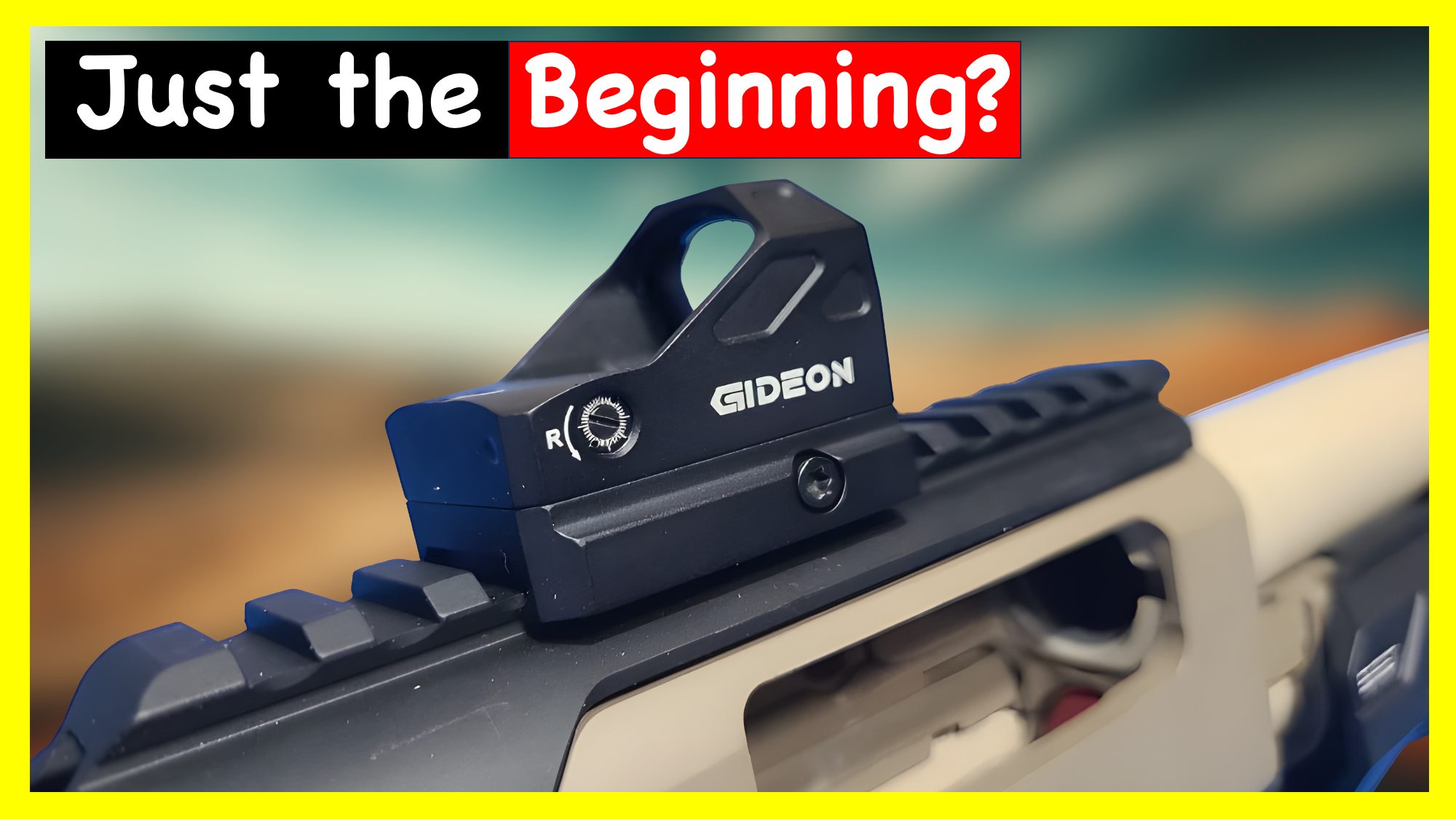
The housing has angled cuts on the sides–most red dots are rounded on top, which looks fine but doesn’t do anything. The angles add metal right where the housing takes abuse, and they look sharp without screaming “tacticool.”
The Circle-Dot Reticle
But there was one thing I couldn’t warm up to: the circle-dot reticle.
On a pistol, a circle-dot is busy. You’re trying to find a precise point quickly under stress, and that outer ring adds visual noise. I found myself hunting for the center dot in scenarios where a simple 3 MOA dot would have been immediate. It’s not unusable–plenty of people run circle-dots and shoot just fine–but for my eye and my speed, it was a compromise I noticed every time I drew.
I kept wondering if the reticle would make more sense on a long gun, where the circle helps with faster target acquisition at distance. The Alpha is marketed as a pistol red dot, but the mounting footprint works on rifles and shotguns too. I had an AR set aside to test this theory, then I built something that would stress-test it harder.
Shotgun Abuse Testing
The Home Rumbler started as a joke and became a serious test platform. It’s a 12-gauge shotgun I built specifically to punish whatever I mount on it. Pistol recoil is snappy. AR recoil is almost gentle these days. A 12-gauge firing heavy loads beats optics with forces that separate serious hardware from the pretenders.
If the Alpha survived the Rumbler, I’d know something about its durability that bench-testing on an AR wouldn’t reveal.
Mounting the Alpha on the shotgun required an adapter plate–pistol red dots don’t natively mount to shotgun rails–but once locked down, it sat solid. I ran buckshot, slugs, and handloads that push pressure toward the spicy end of the spectrum. The kind of loads that make you check your zero afterward just because physics demands it.
The Alpha held. Through dozens of heavy recoil cycles, the housing stayed tight, the dot stayed on, and the glass didn’t fog or shift. I was running the optic harder than any pistol ever would, and it was performing the same way it had on the P320: reliably, without complaint.
That’s when I realized something about the circle-dot that I hadn’t appreciated on the pistol. On the shotgun, that outer ring was actually useful. At the distances I was shooting slugs–25 to 50 yards–the circle gave me a reference for holdover that a simple dot wouldn’t provide. My eye tracked to the ring naturally, and the center dot was there when I needed precision. The reticle I’d found busy on the pistol felt right on the long gun.
The Green Dot Experience
The Alpha taught me something about green dots, too. This one’s green, not red, and I was skeptical when I first mounted it. Red has been the standard for so long that green felt like a novelty. After a year, I’m starting to prefer it. The green dot pops against most backgrounds without being aggressive. In bright sunlight, it doesn’t wash out as quickly as some red dots I’ve used. In low light, it’s visible without being distracting.
The battery door sits on top of the housing, which I love and hate simultaneously. Love it because I never have to remove the optic to change the battery–unscrew the top, swap the cell, and I’m done. The zero stays intact. Hate it because Gideon used a T10 Torx head instead of a slot or thumb wheel. If your battery dies at the range and you don’t have the little wrench they include, you’re done shooting until you find one. A simple slot that accepts a penny would have been smarter.
That said, the shake-awake feature helps. The optic sleeps when it’s still and wakes when moved. I’ve left it alone for weeks, grabbed the pistol, and the dot was there immediately. Battery life hasn’t been an issue because I’m not burning cells leaving the optic on constantly. Even some brands charging twice the price have been slow to adopt shake-awake, so seeing it on a budget optic is genuinely useful.
Who It’s For
After a year of switching between platforms and conditions, I understand what this optic is and who it’s for.
The Alpha is for the shooter who wants reliable red-dot performance without paying boutique prices. It’s for the person who carries daily and needs something that won’t drift or fail when the weather turns bad and the draw stroke gets ugly. It’s not the lightest optic on the market, and it’s not the most feature-rich, but it works consistently in ways that matter more than spec-sheet comparisons.
Who Should Skip It
It’s not for the shooter who needs a dot-only reticle or demands tool-free battery changes. If you’re running competition where sight picture acquisition speed is measured in hundredths of seconds, the circle-dot will frustrate you on a pistol. If you hate carrying extra tools, the T10 battery door will annoy you eventually.
And it’s not for the shooter who assumes budget means disposable. The Alpha punches above its price point in durability, but that doesn’t make it indestructible. If you’re mounting it on a 12-gauge shotgun and running heavy loads regularly, check your screws and witness marks like you would with any optic. Physics still applies.
How It Compares
At somewhere between $150 and $200, the Alpha occupies that honest middle ground where compromises are expected but excuses aren’t. The reticle preference is real–I’d buy a dot-only version tomorrow if Gideon offered it. The battery door tool requirement is an oversight that should have been caught in design review. But those are preferences and inconveniences, not failures.
Frequently Asked Questions
How long does the battery last on the Gideon Alpha?
Battery life has not been an issue over a year of use, thanks to the shake-awake feature. The optic sleeps when still and wakes when moved, so you’re not burning cells leaving it on constantly. Most users report months of use between changes depending on draw frequency.
Does the Gideon Alpha hold zero on a shotgun?
Yes. After dozens of heavy recoil cycles with buckshot, slugs, and high-pressure handloads on a 12-gauge shotgun, the housing stayed tight, the dot stayed on, and the glass did not fog or shift. Check your mounting screws and witness marks regularly, as physics still applies.
Is the circle-dot reticle good for pistol use?
On a pistol, the circle-dot can feel busy. The outer ring adds visual noise when trying to find a precise point quickly under stress. However, plenty of people run circle-dots and shoot just fine. If you prefer a simple dot, Gideon does not currently offer a dot-only version.
What kind of battery does the Gideon Alpha use?
The Gideon Alpha uses a standard CR2032 battery. The battery door sits on top of the housing, so you never have to remove the optic to change the battery–the zero stays intact.
What tool do I need to change the battery?
The battery door requires a T10 Torx driver. The optic includes a small wrench, but if you lose it, you’ll need to have one in your range bag. A slot that accepts a penny would have been a smarter design choice.
Does the Gideon Alpha work on rifles and shotguns?
Yes. While marketed as a pistol red dot, the mounting footprint works on rifles and shotguns too. Mounting on a shotgun requires an adapter plate since pistol red dots don’t natively mount to shotgun rails.
Is green better than red for red dots?
After a year of use, green is starting to be preferred. The green dot pops against most backgrounds without being aggressive. In bright sunlight, it doesn’t wash out as quickly as some red dots. In low light, it’s visible without being distracting.
What is shake-awake?
Shake-awake means the optic automatically sleeps when still for a period of time and wakes immediately when the firearm is moved. This extends battery life significantly compared to optics that stay on constantly.
Verdict
What matters is that after a year of carry, practice, weather, and deliberate abuse on a shotgun that breaks lesser optics, the Alpha is still on my guns and still earning its place. That surprised me. Most budget red dots show their corners within six months. This one revealed depth instead.
If you’re shopping in this price range and can live with the circle-dot–or if you’re shopping for a long gun where the reticle actually shines–the Alpha deserves consideration. Just keep a T10 driver in your range bag. You’ll need it eventually, and when you do, you’ll be glad you don’t have to rezero afterward.