
I’ve held rifles up to the light at gun shows, squinting down the barrel trying to guess whether what I was seeing meant the rifling was good or if I was about to buy a problem. After twenty years of doing this, I finally picked up something that removes the guessing.
Quick Answer: Is the EndoSnake Worth It?
- $55 waterproof inspection camera with LED brightness control
- Reveals barrel condition that bore lights miss entirely
- Mirror attachment only works for .40+ caliber; iOS requires $25 WiFi adapter
Featured Product
EndoSnake USB Borescope Camera
~$55
3.9mm diameter • USB-A/C/Micro adapters included • Waterproof • 3ft cable
What Is the EndoSnake?
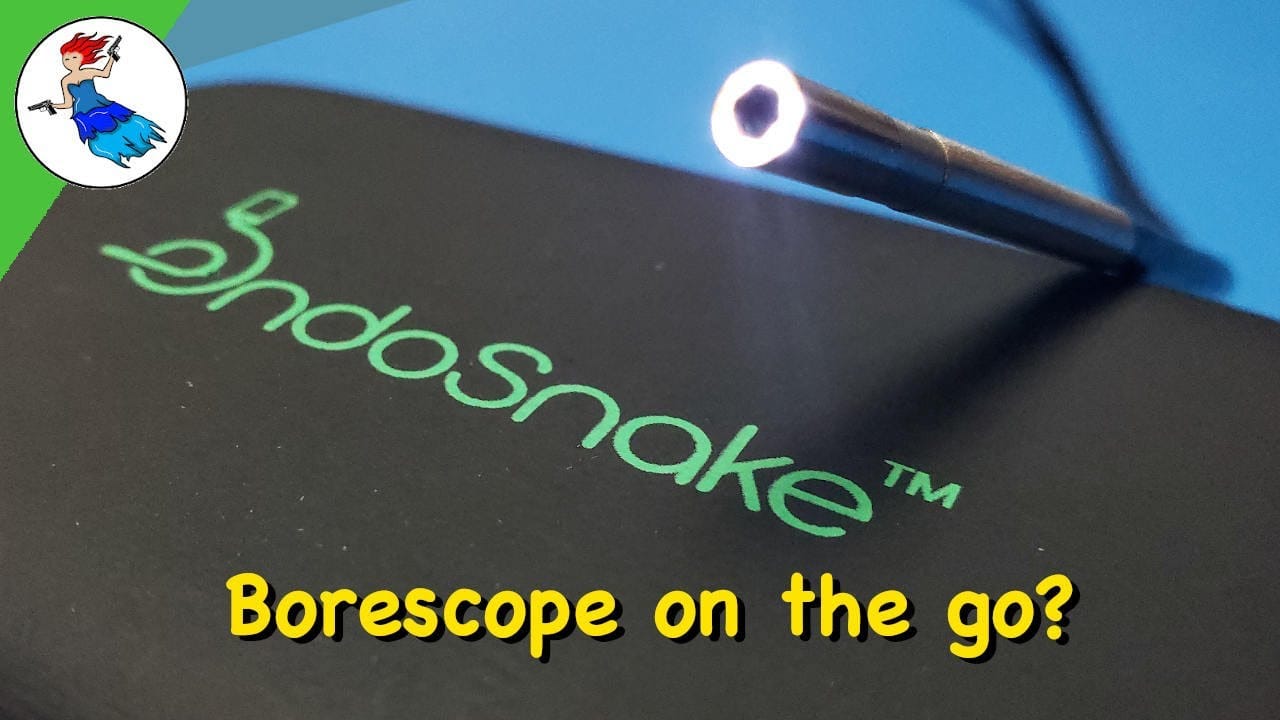
The EndoSnake runs about fifty-five dollars. It’s a waterproof inspection camera with a cable you feed down the barrel, connecting to whatever screen you’ve got handy—phone, tablet, laptop. The box includes adapters for USB-A, micro-USB, and USB-C, so most Android devices plug right in. iOS users need a separate WiFi adapter that runs another twenty-five bucks. The cable has a dial that controls LED brightness at the tip, plus a button for still images.
I didn’t expect much at this price. I’ve seen plenty of “budget” bore scopes that produced pixel soup and died after three uses. But fifty-five dollars seemed worth finding out what I’d actually been shooting through all these years.
AR-10 Inspection
The first firearm I checked was an AR-10 in .308. From the outside, it looked clean enough. The bore light said it was fine. The EndoSnake told a different story. Lint collected near the gas port—actual fabric fibers, probably from the safe or a case. Copper fouling clung to the lands in patches the bore light never revealed. I could see exactly where the gas port sat and how the metal looked around it. The barrel wasn’t terrible, but it wasn’t as clean as I’d assumed. That distinction matters when you’re deciding whether to spend your afternoon on maintenance or move on to something else.
Learning to Use the EndoSnake
What I learned immediately: this thing takes practice. You have to move slowly. Twist the cable and the image rotates, which sounds obvious until you’re doing it inside a dark barrel and suddenly can’t tell which way is up. It took a while to learn feeding it in small increments, holding the housing steady while rotating the cable deliberately. There’s no manual that teaches you this. You just do it wrong enough times to learn what right feels like.
M1 Garand Discovery
Next was an M1 Garand that sits in the safe between range trips. I’d cleaned it after the last outing, or thought I had. The EndoSnake revealed rust spread through the barrel like frosting on metal. The rifling was degraded to the point where I understood, seeing it clearly for the first time, why this rifle groups the way it does. Not dangerous, but not going to get better. I’m looking at a re-barrel job in its future. Without the camera, I might have kept shooting it, gradually making things worse while assuming the bore was “rough but serviceable.”
That discovery changed how I approached the rest of the testing. I stopped assuming anything.
Remington Viper Finding
A Remington Viper .22 that’s been neglected in storage came next. The EndoSnake showed leading throughout the entire barrel—heavy deposits that explained the accuracy issues I’d been blaming on ammunition. Surface rust spotted the walls. This gun needs real attention before it sees another range day, attention I wouldn’t have known to give it without seeing what was actually in there.
Dan Wesson Lesson
The Dan Wesson .357 revolver from my childhood presented a different lesson. The barrel looked fine at first pass, but I noticed leading concentrated right at the beginning—deep enough that I could probably scrape it off with a pick. The rest of the bore was decent. That’s specific, actionable information that changes how you approach maintenance. Clean the whole thing, sure, but pay special attention to that first few inches where the leading actually lives.
Beretta 1915 Assessment
I saved the Beretta 1915 for last. It’s a collector’s piece, about a hundred and five years old, chambered in 9mm Glisenti. I expected deterioration. What I found was a barrel in genuinely good condition for its age—minimal rust on the breech face, rifling still present and functional. We’ve shot it a few times just to confirm it works, but seeing the inside clarified why I’m comfortable doing that occasionally while treating it primarily as a historical piece. The camera gave me confidence in a decision I’d been making based on external appearance and hope.
Accessories and Limitations
About those accessories: there’s a mirror attachment for viewing the lands and grooves at an angle, which sounds useful until you try to use it. The mirror only fits barrels of .40 caliber or larger. I tried forcing it down the AR-10’s .308 bore. It wouldn’t go. Same story with a 30-06. The mirror is essentially useless for most rifle inspection, which is probably the main reason someone buys a bore scope. There’s also a hook and magnet for retrieving dropped items, which I didn’t test.
The clips that hold the attachments are fiddly, and I wouldn’t trust them in a tight bore anyway. For rifle work, you’re looking straight down the barrel, not at a 90-degree angle. That’s a significant limitation if you need to inspect lands and grooves closely. For fifty-five dollars, though, I’m not sure that limitation is unreasonable. Just know what you’re getting.
Verdict
If I were rating this thing, I’d give it three and a half out of five. The core functionality works. The image quality is adequate for seeing rust, leading, lint, and general barrel condition. The build feels serviceable. The mirror attachment is a disappointment for rifle shooters, and iOS users face that extra twenty-five dollar hurdle. But the fundamental question—can you see what’s actually inside your barrel for less than the cost of a tank of gas—gets answered affirmatively.
Who should buy this? Anyone who maintains their own firearms and wants to stop guessing. DIY gunsmiths. People with used guns in the safe whose internal condition is unknown. Collectors who need to assess barrel condition before purchasing or shooting.
Who should skip it? Professional gunsmiths who need documentation-quality images or 90-degree inspection capability. People who only own .30 caliber rifles and specifically need mirror inspection of lands and grooves. Anyone expecting professional-grade performance at entry-level pricing.
FAQ
Q: What does the EndoSnake show that a bore light doesn’t?
A bore light gives you a general sense of bore brightness. The EndoSnake reveals specific problems like lint near the gas port, copper fouling on the lands, surface rust, and leading deposits—details that change how you approach maintenance.
Q: What comes in the box?
The EndoSnake includes the inspection camera with LED brightness dial and still image button, plus adapters for USB-A, micro-USB, and USB-C. Most Android devices plug right in. iOS users need a separate WiFi adapter that costs an additional twenty-five dollars.
Q: Can the mirror attachment inspect rifle lands and grooves?
No. The mirror only fits barrels of .40 caliber or larger. It wouldn’t go down a .308 or 30-06 bore. For rifle work, you’re looking straight down the barrel, not at a 90-degree angle.
Q: How difficult is it to use?
It takes practice. You have to move slowly and learn to twist the cable deliberately while holding the housing steady. The image rotates as you twist, which can be disorienting in a dark barrel until you learn the technique.
Q: What can the EndoSnake actually detect?
In testing, it revealed lint collected near the gas port, copper fouling patches, rust spread through the barrel like frosting on metal, leading throughout the entire barrel, and surface rust spotting the walls—conditions a bore light never showed.
Q: Is it worth the price?
For fifty-five dollars, you can see what’s actually inside your barrel for less than the cost of a tank of gas. The image quality is adequate for identifying rust, leading, lint, and general barrel condition. The build feels serviceable. It’s a three-and-a-half out of five product that delivers honest value at its price point.
Q: Who should buy the EndoSnake?
Anyone who maintains their own firearms and wants to stop guessing, DIY gunsmiths, people with used guns of unknown internal condition, and collectors who need to assess barrel condition before purchasing or shooting.
Q: Who should skip it?
Professional gunsmiths who need documentation-quality images or 90-degree inspection capability, people who only own .30 caliber rifles specifically needing mirror inspection of lands and grooves, and anyone expecting professional-grade performance at entry-level pricing.
Final Thoughts
I started skeptical that a fifty-five dollar camera could tell me anything useful. After running five firearms through it—including one that probably saved me from continuing to shoot a rusted barrel—I stopped being skeptical. It won’t do everything. It won’t do what professional borescopes do. But it does enough, and what it does, it does honestly.